In
Ha Giang, the road does more than just wind through karst peaks; it draws us into the lives of people whose existence is shaped by the heights. To truly understand this province, one must step off the beaten path and observe the daily rhythm of those who live among the clouds.
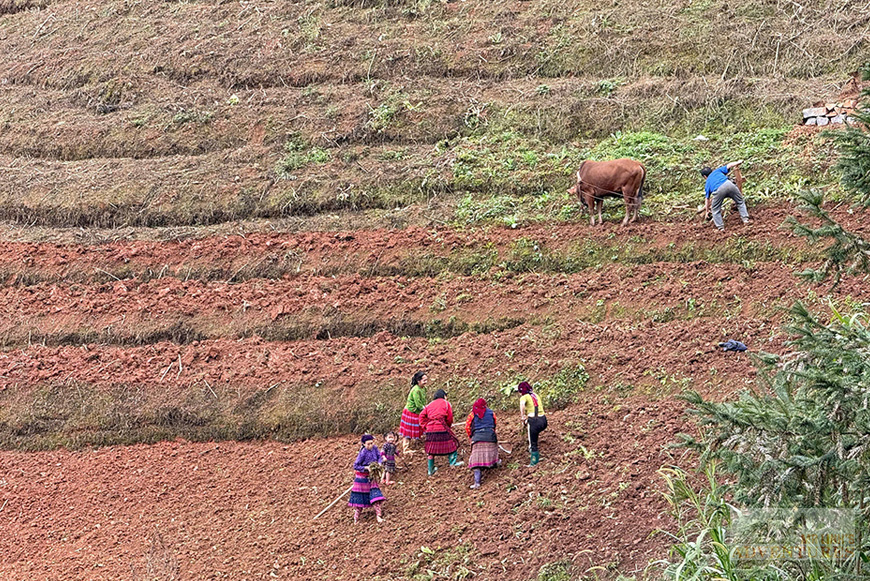 The "Kings of the Mountains" have mastered corn growing | Mr Liinh's Adventures
Hmong resilience: Etched in stone
As you venture deeper into the
Dong Van Plateau, the silhouettes of the
Hmong people stand out against the grey rock. Often called the "Kings of the Mountains," they have mastered the art of growing corn where nothing else seems to take root, tucking each seed into the narrow crevices of limestone blocks. This peaceful struggle with the earth has forged a character of quiet nobility.
Their homes are a testament to this fusion with the land. Built from clay soil gathered at the foot of the mountains, the
Trình Tường houses feature thick, ochre walls that act as true fortresses of comfort. They stay cool when the sun beats down on the plateau and hold the hearth's warmth when winter frosts the peaks.
Every home is protected by a
Hàng Rào Đá; a dry stone wall built by hand, stone by stone, without a single of cement. More than just a barrier, it is a monumental labor of love. To farm corn on these arid slopes, men must literally clear the limestone rocks from their fields. These stones, pulled from the mountain, then become the ramparts of domestic life. This mineral puzzle, with its bluish-grey hues contrasting against the ochre earth, speaks volumes about the resilience of these people in the face of a rugged landscape.
Inside, beneath dark tiled roofs, women can be found spinning and weaving hemp. Patiently, the fibers are washed, bleached, and dipped repeatedly in indigo until they reach the deep, near-black blue that defines Hmong clothing. The embroidered geometric patterns serve as a silent language for different lineages. In villages like
Lao Sa, the immersion is total: you can hear the steady rhythmic hammering of silversmiths crafting heavy jewelry, while the scent of fermenting corn wafts from the kitchens.
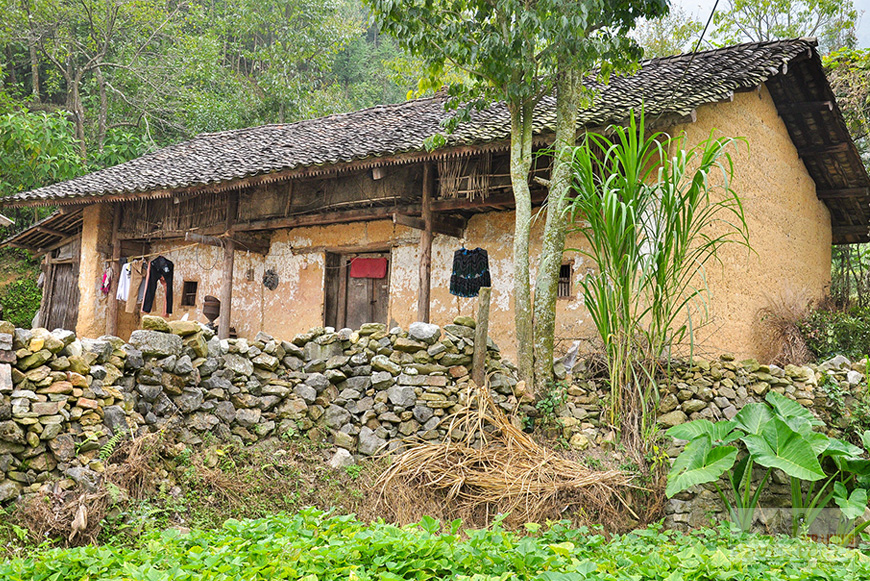 A traditional the Trình Tường houses with its Hàng Rào Đá low wall | Mr Linh's Adventures
Forest wisdom and Dao elegance
Descending toward the gentler valleys, such as
Quản Bạ, the scenery shifts. This is where the
Dao people have made their home. Among the
Long-Tunic or Red Dao, elegance is a matter of precision. Their outfits are an explosion of detail: vibrant red pom-poms, meticulous embroidery, and headpieces that jingle with every movement.
But beyond the aesthetics, it is an intimate knowledge of nature that defines the Dao. They are the guardians of traditional medicine. Walking through a village like
Nặm Đăm, you breathe in the scents of cinnamon, lemongrass, and medicinal roots. Their famous herbal bath is more than just a wellness ritual for weary travelers; it is ancestral wisdom passed from mothers to daughters to heal both body and soul.
Spirituality also plays a central role in their lives. The transition to adulthood for a Dao man is marked by the
Cấp Sắc ceremony. This rite of passage, both solemn and festive, is when the individual receives their spiritual name, becoming a respected community member capable of communicating with the ancestors. It is this invisible depth, this constant link between the living and the spirit world—that gives Dao villages such a peaceful, timeless atmosphere.
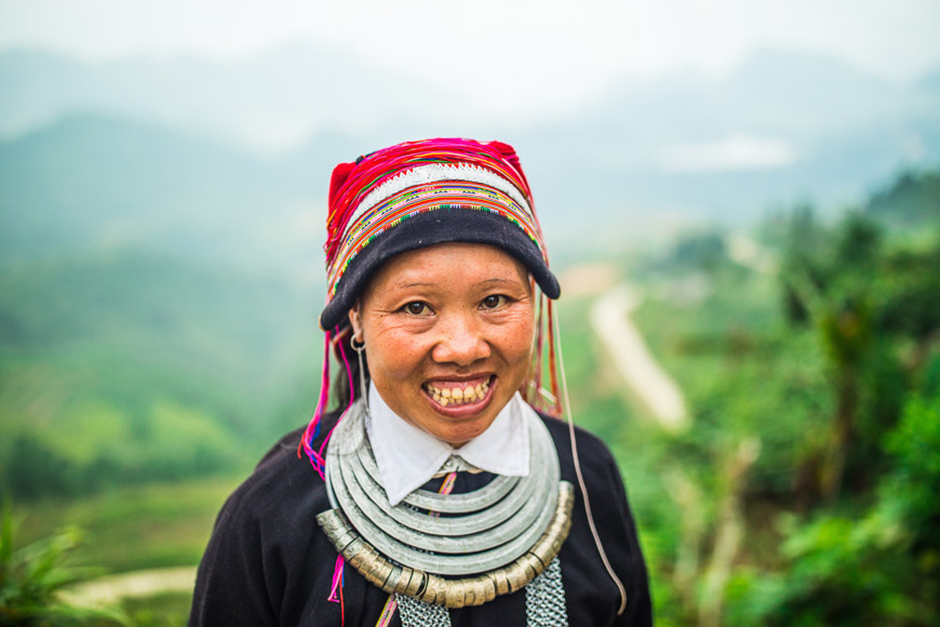 A Dao woman from Nam Dam village | Vietnam Tourism
The art of the encounter
Traveling through these villages requires a certain slowness. It is not so much the destination that matters, but the quality of the moment: a shared glance over a loom, the scent of a wood fire lighting up at dusk, or the raw taste of tea shared on a wooden bench.
Ha Giang reveals itself to those who slow down; it speaks to those who know how to pause and listen to the silence of the mountains.
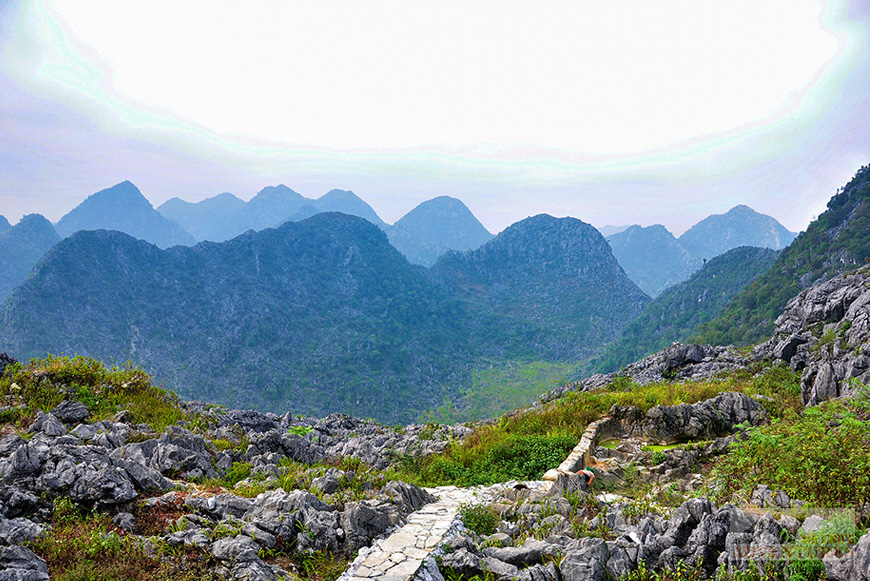 Mesmerizing Dong Van Plateau | Mr Linh's Adventures